
Beyond Tidying Up: The Wabi-Sabi Guide to Finding Beauty in Imperfection
Perfection is exhausting. What if the secret to a peaceful home isn't about having everything perfect, but about embracing its unique story? Discover Wabi-Sabi, the Japanese art of finding beauty in imperfection. 🍂
HOME HARMONY
Xiaomin
8/26/20253 min read
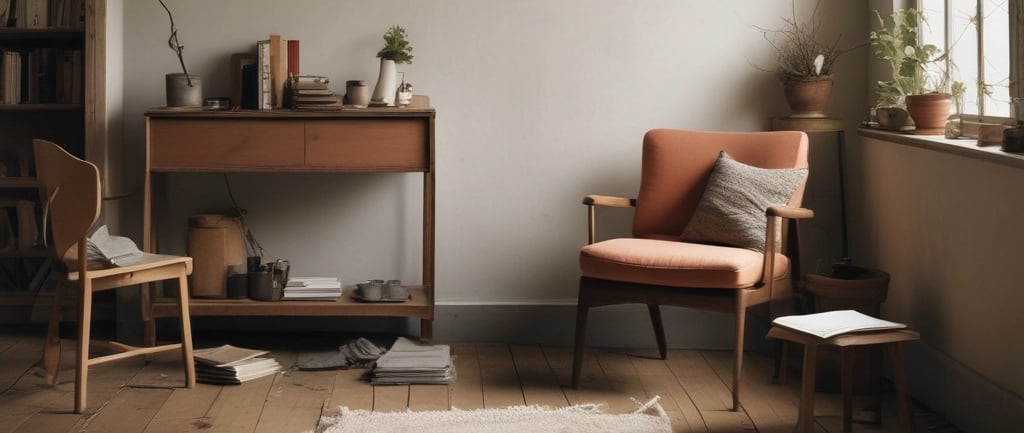
n a world obsessed with glossy perfection and the relentless pursuit of the flawless, a quiet revolution is taking root in our homes and hearts. It’s a gentle whisper that says, “It’s okay to be imperfect.” This is the essence of Wabi-Sabi, the ancient Japanese philosophy of finding beauty in the imperfect, impermanent, and incomplete. 🍂
If you’ve ever felt the pressure to have a picture-perfect home, to constantly upgrade, and to keep up with fleeting trends, then the concept of Wabi-Sabi might just be the breath of fresh air you’ve been seeking. It’s a departure from the sterile and the mass-produced, and an embrace of the authentic, the soulful, and the gracefully aged.
What is Wabi-Sabi, Really?
Wabi-Sabi is more than just a design trend; it's a worldview. It’s about appreciating the beauty of things as they are, with all their quirks and history. Think of a well-loved wooden table with scratches that tell stories of family dinners, a handcrafted ceramic mug that isn’t perfectly symmetrical, or the beauty of a flower as it begins to wilt.
This philosophy is rooted in two key principles:
Wabi: This refers to a sense of rustic simplicity, quietness, and a connection to nature. It’s about finding satisfaction in less and appreciating the beauty of understated elegance.
Sabi: This speaks to the beauty that comes with age and the passage of time. It’s the patina on an old metal tray, the faded colors of a vintage rug, or the weathered texture of a stone path.
Together, they create a feeling of warmth, authenticity, and peace in our surroundings.
Bringing Wabi-Sabi into Your Home 🏡
Embracing Wabi-Sabi in your living space is not about a complete overhaul. Instead, it’s about a shift in mindset and making intentional choices. Here are a few simple ways to invite this philosophy into your home:
Celebrate Natural Materials: Incorporate elements from the natural world. Think wooden furniture, linen curtains, bamboo accents, and stone coasters. These materials bring a sense of the outdoors in and age beautifully over time.
Embrace Asymmetry: Let go of the need for everything to be perfectly matched and symmetrical. Arrange cushions in a relaxed way, display a single, interesting branch in a vase, or hang artwork slightly off-center.
Cherish the Old and Imperfect: That chipped teacup from your grandmother? The slightly faded armchair that’s incredibly comfortable? These are the pieces that hold stories and give your home character. Don't be so quick to replace them. The Japanese art of kintsugi, where broken pottery is repaired with gold lacquer, beautifully illustrates this idea of highlighting imperfections.
Declutter with Intention: Wabi-Sabi is not about stark minimalism, but about surrounding yourself with objects that you truly love and that have meaning. Let go of the things that are just taking up space and focus on curating a collection of items that bring you joy.
Mindful Living: Pay attention to the small moments of beauty in your everyday life. The way the light filters through a window in the morning, the texture of a handwoven blanket, the simple pleasure of a warm cup of tea. 🍵
From Imperfect Homes to Imperfect Lives
The principles of Wabi-Sabi don’t just apply to our homes; they can be a powerful guide for how we navigate our lives. In a culture that often pushes us to present a flawless version of ourselves, embracing Wabi-Sabi means accepting our own imperfections, our unique journeys, and the beautiful, messy reality of being human.
We all have our own "cracks" and "weathered edges"—our past experiences, our perceived flaws, and the unexpected turns our lives have taken. Just like the Wabi-Sabi home, these are not things to be hidden, but rather what make our life stories rich and authentic.
This is where understanding our unique life path can be so incredibly insightful. What if you could gain a deeper understanding of your own personal blueprint? What if you could see the inherent strengths and patterns that have shaped your journey, much like the grain in a piece of wood?
This is the wisdom offered by ancient practices like Bazi, or "The Four Pillars of Destiny." Rooted in Chinese metaphysics, a Bazi reading uses your birth information to create a detailed chart of your life’s potential. It doesn’t predict a fixed future, but rather illuminates your innate character, your talents, and the cycles of your life. It helps you understand your personal "Wabi-Sabi"—the beautiful, imperfect, and utterly unique composition of you.
By understanding your Bazi chart, you can learn to work with your nature, not against it. You can discover the best times to take action, when to rest, and how to navigate challenges with greater ease and self-awareness. It’s about embracing your authentic self and finding the profound beauty in your own, one-of-a-kind life story.
Ready to explore the beautiful imperfections of your own life's design? Discover the clarity and insight a Bazi reading at zenandchi.com can offer. It’s time to move beyond the pursuit of perfection and start celebrating the incredible story of you. ✨